Case Study 01 | Service Design

Evolving holistic conversion strategy through service design.

Sinclair's local news business depends on readers staying long enough to consume stories, engage with content and eventually convert. But account and app prompts were interrupting readers too early. I first removed a high-friction prompt, generating $125K in incremental ad revenue, then used service design to help the organization shift toward a value-first, trust-first conversion strategy.

Lead UX Researcher & Service Designer80+ local news stationsGA4 + primary research + service design
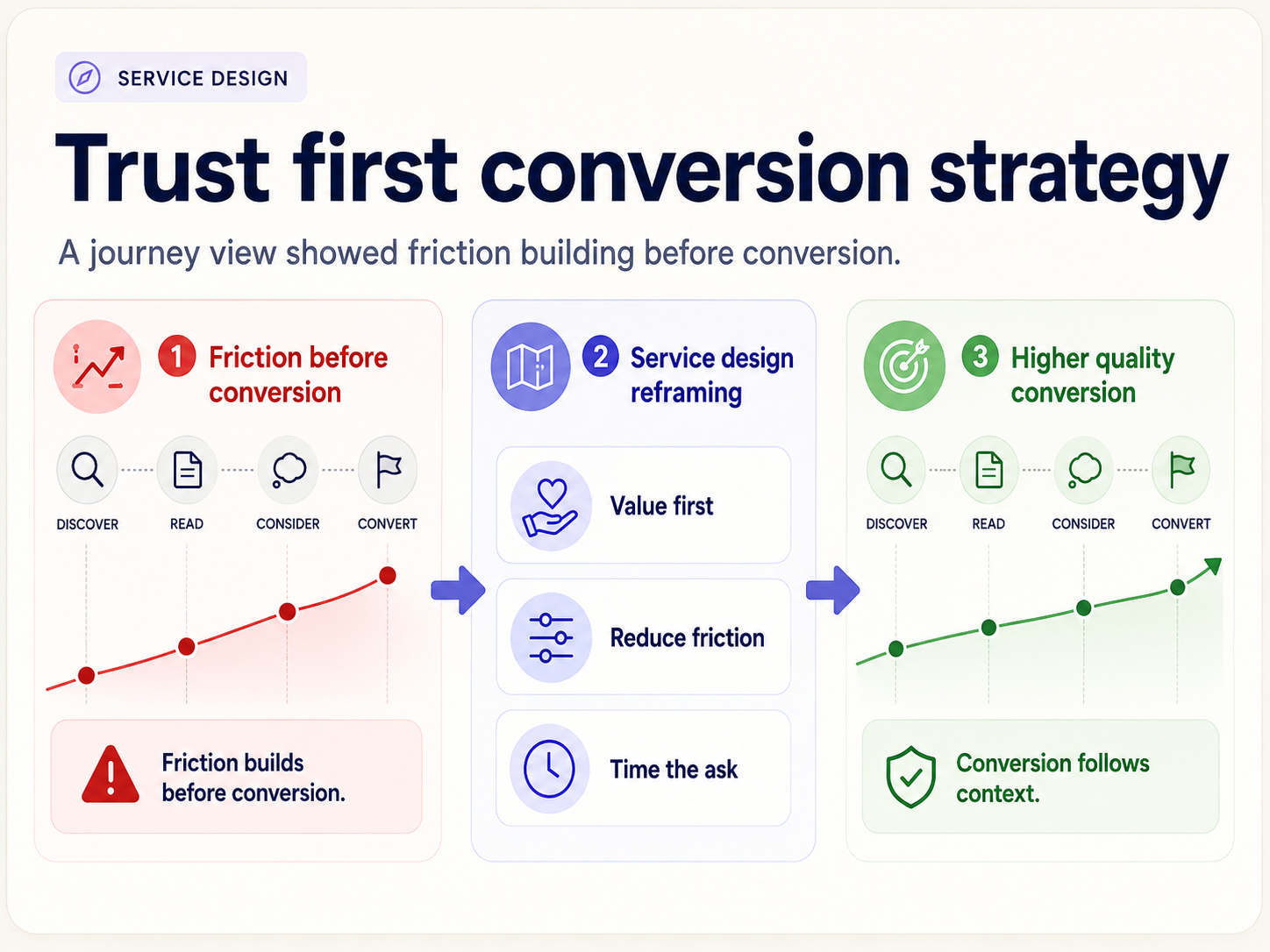
Service design visual showing friction before conversion, service design reframing and a trust first conversion strategy.
The service design story moved from friction before conversion to a trust first strategy.
$125K
incremental ad revenue from higher readership after the Phase 1 changes
2.7x
increase in new-reader story consumption over two months
43%
reduction in first-time-user abandonment after removing the popup
01

A quick win opened the door to a bigger strategy question

The initial problem looked like a conversion optimization issue, but the underlying business tension was broader: the organization wanted more known users while readers wanted fast access to local stories. Phase 1 removed a major interruption and improved readership. Phase 2 used service design to reframe how, when and why conversion requests should appear across the journey.
02

What I led

End-to-end research & service design

I framed the mandate, mapped the current system, connected behavioral analytics with customer evidence, facilitated the stakeholder decision, and led the strategic Phase 2 reframe.

Cross-functional alignment

I worked across Product, Data, Marketing, Editorial and Engineering so the recommendation balanced customer experience with the business need for known-user growth.

03

Conversion goals were competing with the reading experience

Business need

Grow known users and first-party data through account creation and other conversion mechanisms.

Reader need

Get to a relevant local story quickly, especially when arriving cold from search, social, alerts or shared links.

04

Three evidence streams showed the cost of the current experience

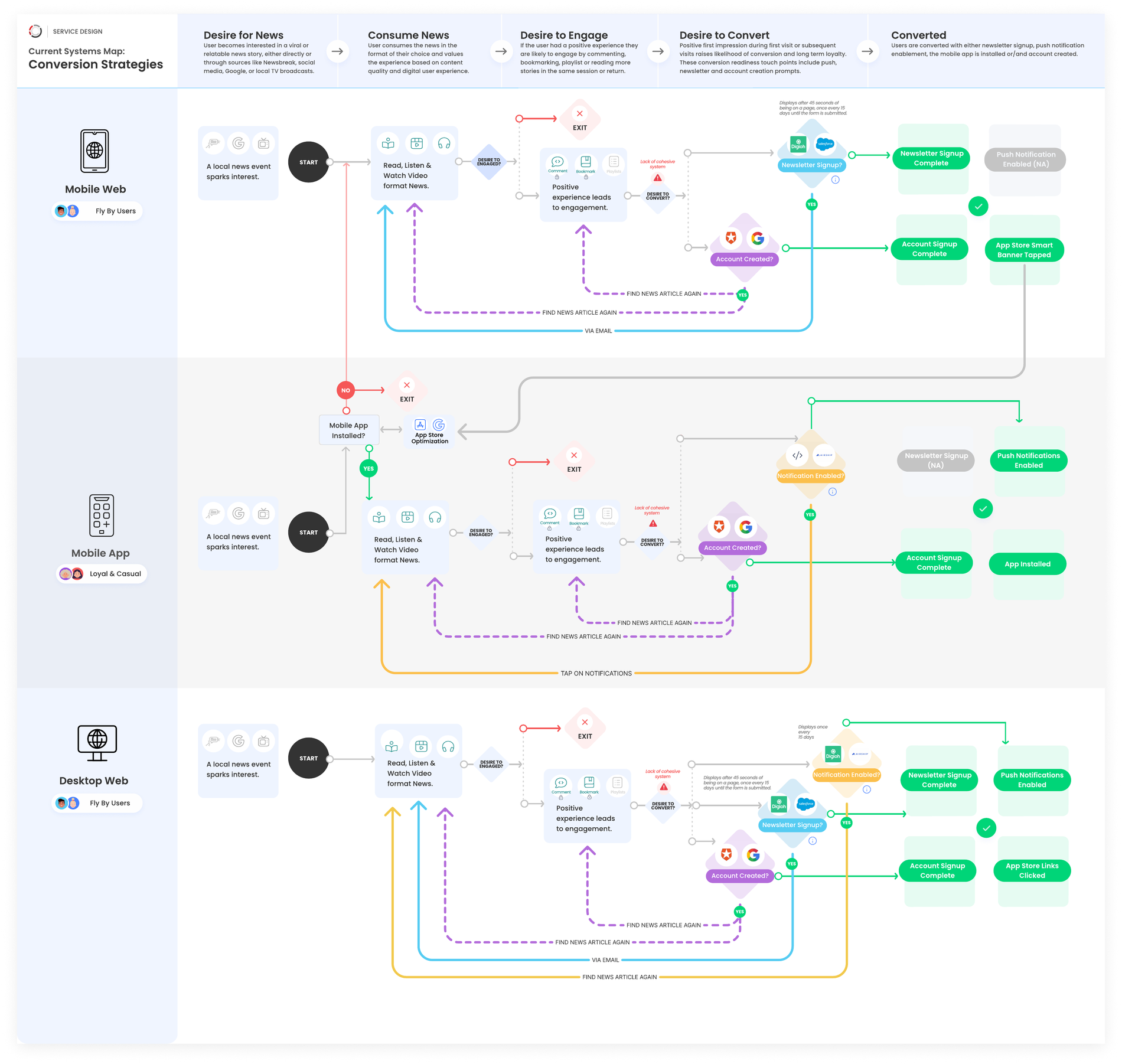
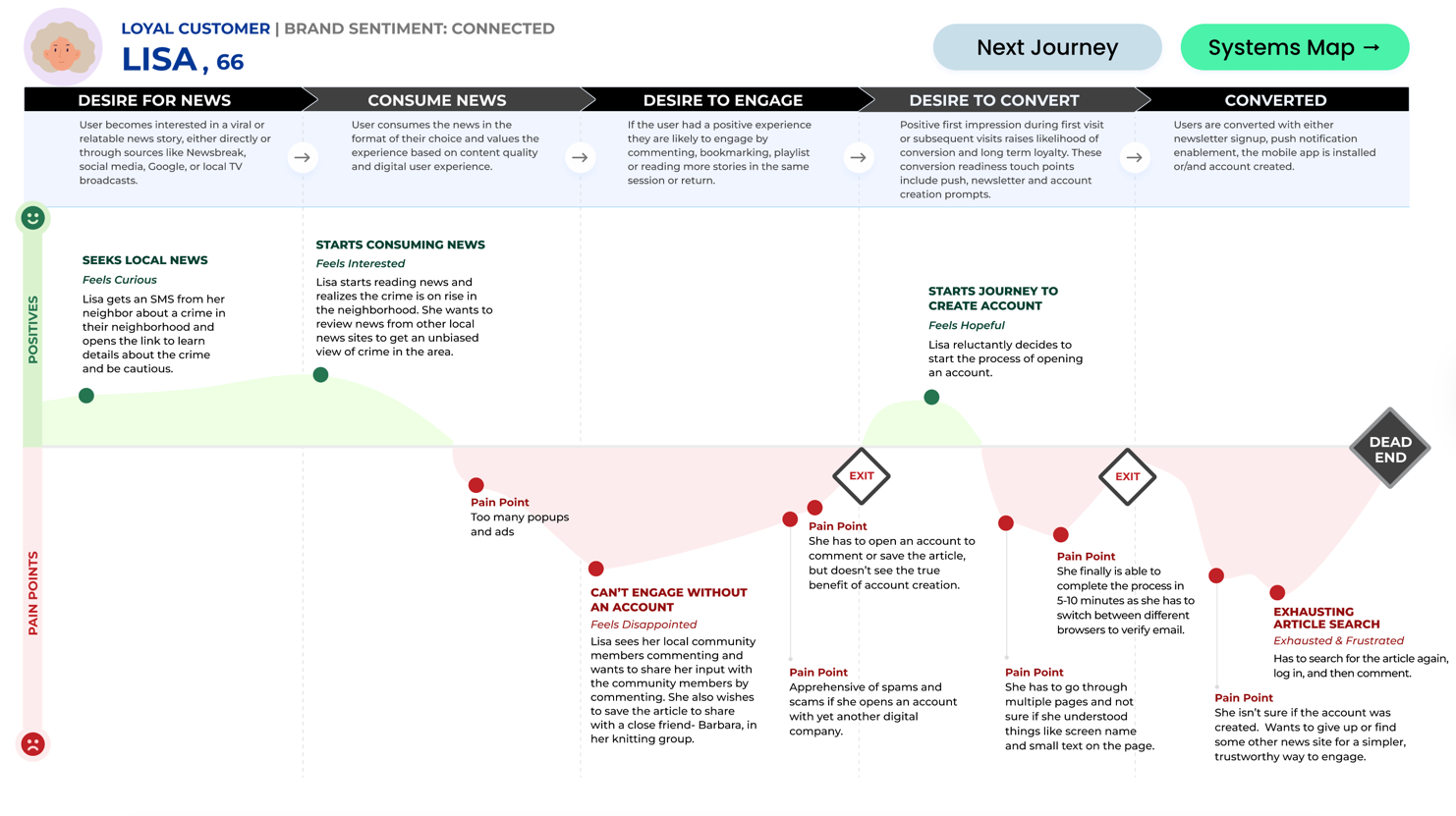
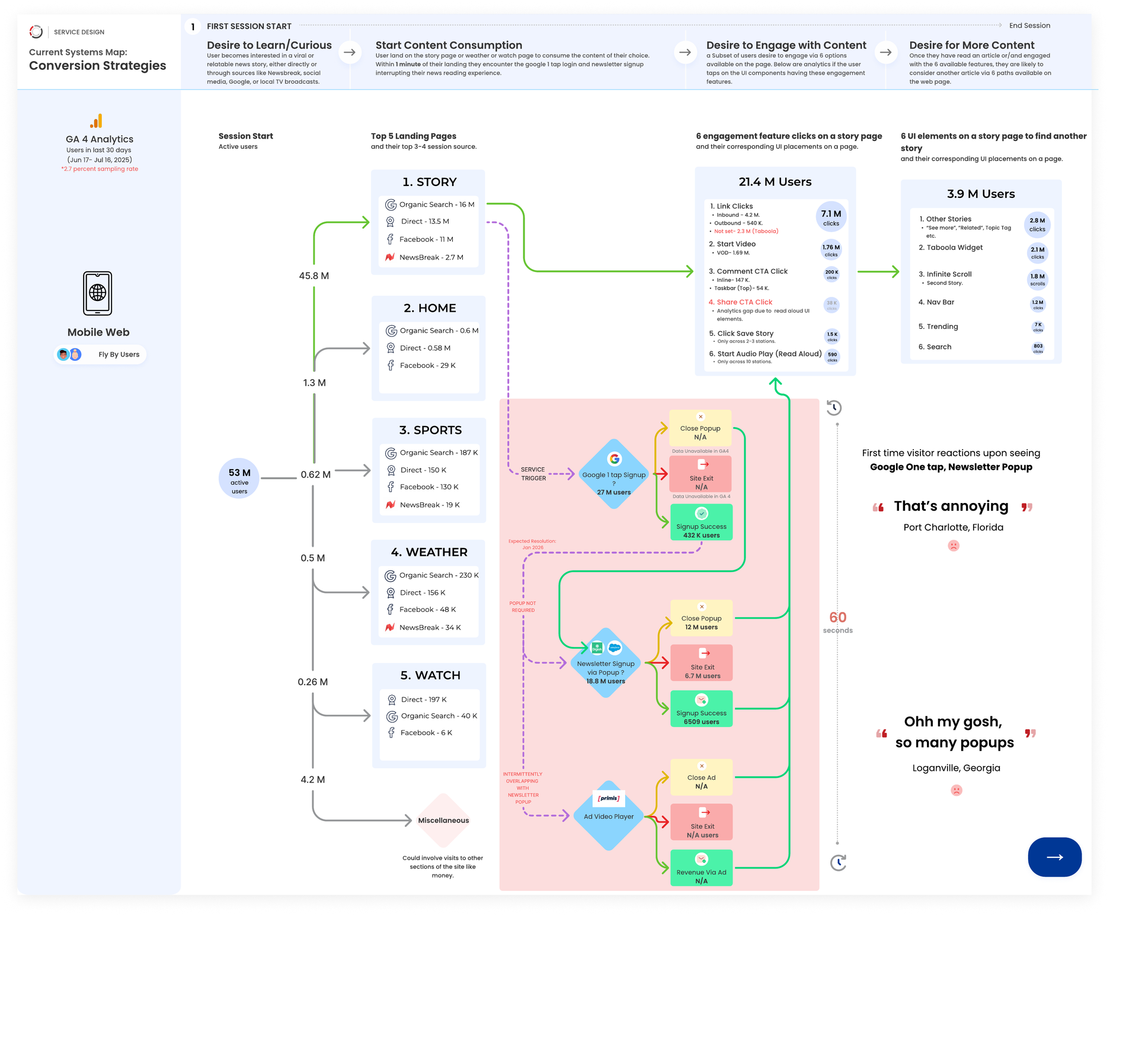
The systems map showed siloed ownership. The journey showed the sequence of friction. GA4 quantified the cost.

Customer journey - friction accumulated before conversion felt useful.

Customer journey - friction accumulated before conversion felt useful.

View full size
GA4 overlay - 18.8M popup exposures, 6.7M exits and 6,509 signups.

GA4 overlay - 18.8M popup exposures, 6.7M exits and 6,509 signups.

View full size
Systems map showing multiple owners around the conversion experience

Systems map - the reading and conversion experience crossed multiple teams, which made the friction a service problem, not only a UI problem.

View full size
05

Remove the account prompt and protect readership

The tension

Marketing had a legitimate reason to protect a first-party-data acquisition mechanism.

The decision

Leadership approved removing the account-creation popup because the abandonment cost was materially larger than the value created by the small number of signups.

Trade-off accepted

We gave up one immediate capture mechanism to protect readership and create room for a more strategic conversion model.

06

Shift from ask first to trust first

Before

  • Generic prompts early in the session
  • Optimize the conversion event
  • Same logic for different reader contexts

After

  • Deliver value before the ask
  • Let context and behavior determine timing
  • Optimize the customer relationship
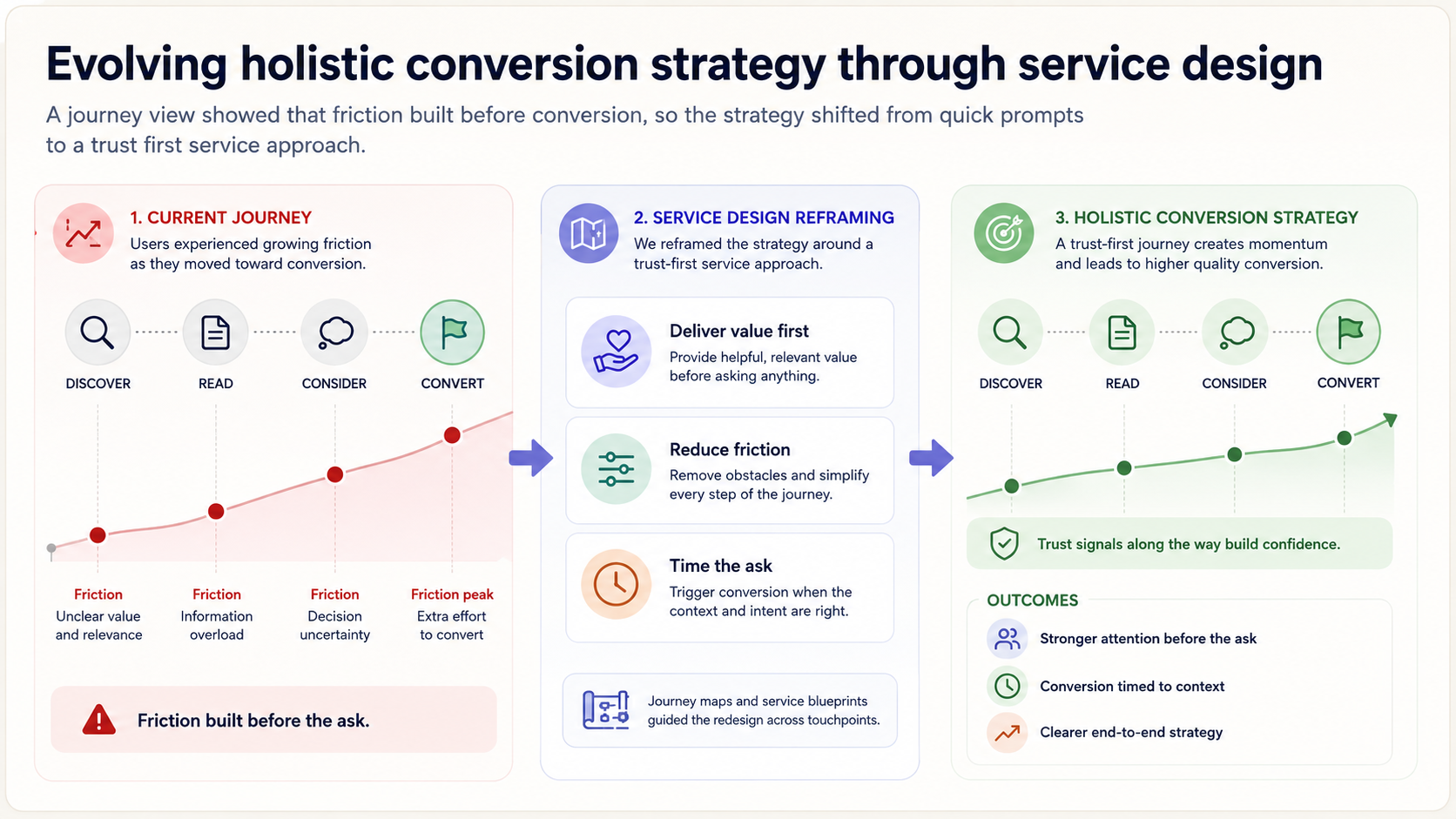
Holistic conversion strategy visual showing the current journey, service design reframing and a trust first conversion approach.

The journey view made the strategic shift visible: reduce friction, deliver value first and time conversion to reader context.

07

Make the trust building strategy testable

Phase 2 reused the four behavioral archetypes from the persona study, then added diary-study evidence and a Jobs-to-Be-Done lens to understand how friction and switching risk differed by reader context.

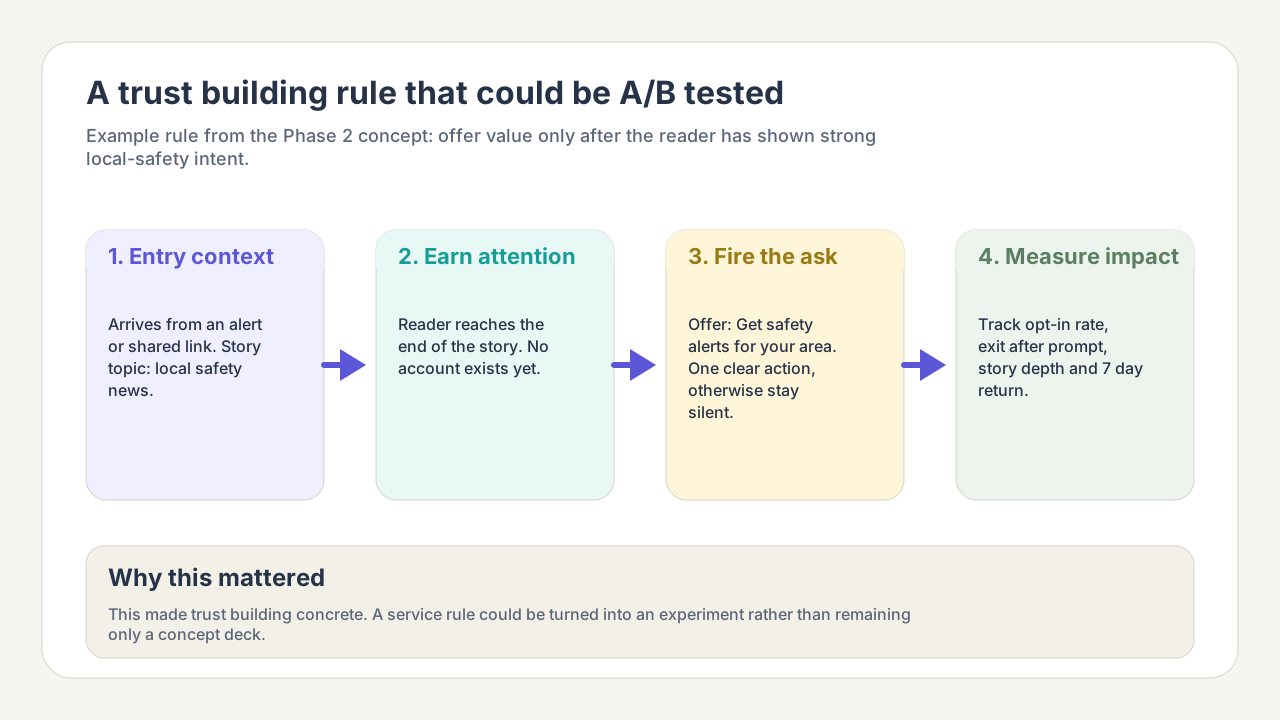
Clean visual showing a trust building rule that could be A B tested.

A context aware service rule made the trust building strategy testable.

View full size
Strategic evidence, not only a UI fix

The strategic effort was about designing when to ask, what to ask for and how to use context so conversion supported trust instead of competing with it.